One-Minute Summary
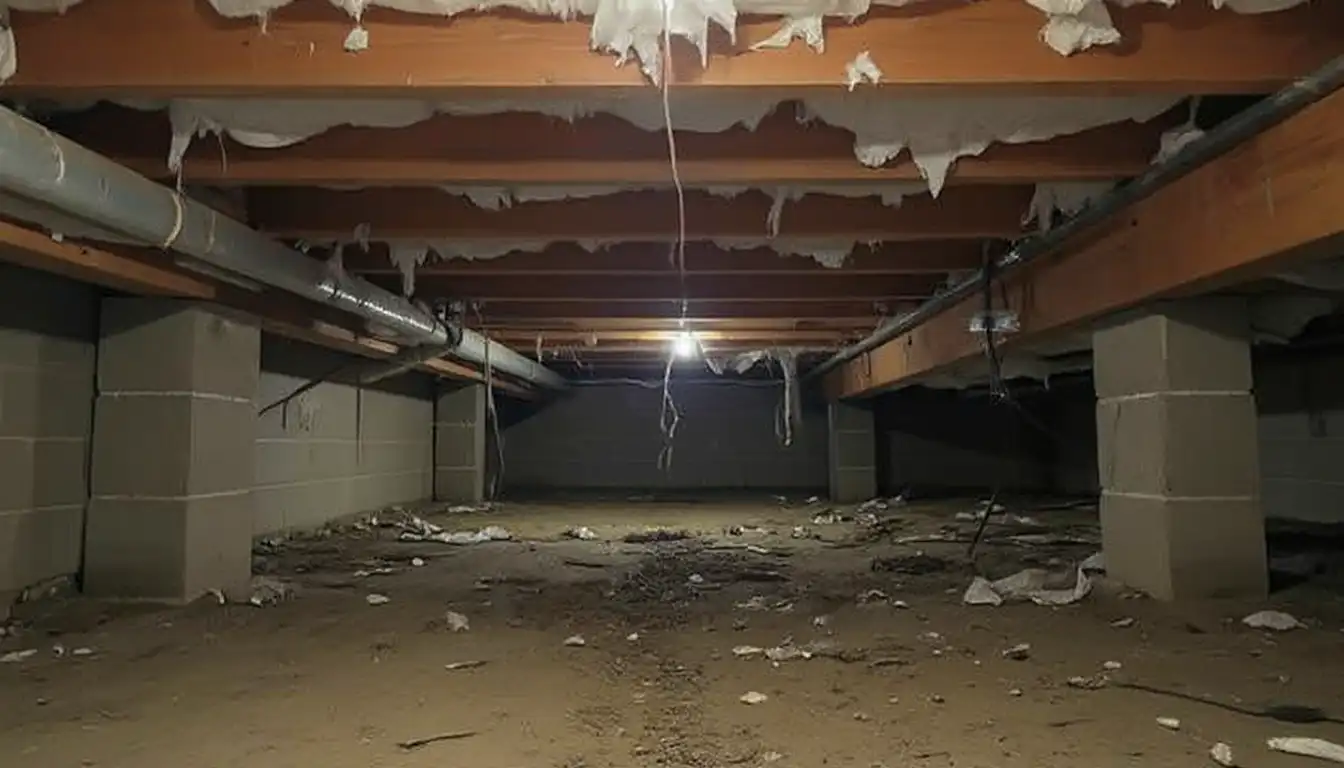
If your first floor is cold, your energy bills keep climbing, or your home has a persistent musty smell — the problem is almost certainly your crawlspace. The stack effect pulls 40-50% of first-floor air from below, carrying moisture, mold spores, and temperature extremes into every room. Vented crawlspaces average 77% humidity (above the mold threshold), while sealed crawlspaces hold at 52%. Sealing and conditioning a crawlspace reduces energy use by 10-30%, eliminates summer condensation, and improves indoor air quality measurably. The right solution depends on your specific conditions — from a vapor barrier alone to full encapsulation.
Every claim in this guide is grounded in published research from the Department of Energy, the EPA, and Advanced Energy — the organization that conducted the landmark 100-home crawlspace study. Each section stands on its own, so you can read straight through or jump to the topic that matters most. For deeper physics, see the crawlspace science page.
Section 1 of 10
The Stack Effect: Your Crawlspace Breathes Into Your Home
The stack effect is a continuous air exchange driven by temperature differences between inside and outside your home. Warm air rises and escapes through upper-level gaps — attic penetrations, recessed lights, plumbing chases. Replacement air gets pulled in from the lowest entry point: the space beneath your floor. Building science research measures that 40-50% of first-floor air originates from the crawlspace.
This operates 24/7, 365 days a year, regardless of whether your HVAC system is running. Every crack, gap, and opening in your floor system — plumbing penetrations, duct boots, wiring holes, subfloor gaps — becomes a pathway for crawlspace air to enter your living space.
How the Stack Effect Works
- Warm air rises and exits via attic leaks, upper-story gaps, and exhaust fans
- Negative pressure develops at the lowest level — your crawlspace
- Replacement air enters through vents, rim joist gaps, and foundation cracks
- Crawlspace air — carrying moisture, temperature, and contaminants — mixes with living space air
How the Stack Effect Moves Crawlspace Air Into Your Home
The intensity increases with temperature difference. During a Kansas City January in the teens with your thermostat at 70°F, the pressure differential is strongest — pulling the coldest crawlspace air upward during the months you most need heating. Summer reverses the mechanism but not the problem: your home continuously inhales from below through different pathways in different seasons.
This changes how you should think about home comfort. Cold floors are not just a surface-temperature issue — they reflect cold crawlspace air contacting the underside of your floor. Musty smells are not a cleaning problem — they travel upward through the same air pathways. High energy bills result from your system continuously re-conditioning air that the stack effect replaces with unconditioned crawlspace air.
Check Your Understanding
A homeowner runs a powerful kitchen exhaust fan. Based on what you know about the stack effect, what happens to crawlspace air infiltration while that fan operates?
Reveal Answer
The exhaust fan removes living-space air, increasing negative pressure on lower floors. This shifts the neutral pressure plane downward, expanding the intake zone and amplifying the volume of crawlspace air drawn upward. The stronger the exhaust fan, the more crawlspace air enters the living space during operation.
Section 2 of 10
How Crawlspace Moisture Becomes an Air Quality Problem
Crawlspace moisture degrades your living-space air through two parallel mechanisms: direct transport of water vapor via the stack effect, and biological activity that moisture sustains. When crawlspace humidity exceeds 60% — the EPA's mold-growth threshold — organic materials like floor joists and sill plates become colonization surfaces. Mold spores, volatile organic compounds, and musty odors ride the stack effect directly into your home.
Moisture Sources in a Typical Crawlspace
- Ground vapor: 10-15 gallons/day from 1,000 sq ft of exposed soil (DOE)
- Outdoor air through vents: 75-85% humidity air during Midwest summers
- Condensation: Forms on cool surfaces when dew point is reached
- Bulk water: Groundwater intrusion, drainage issues, plumbing leaks
- Capillary action: Moisture wicking upward through concrete block walls
Exposed soil is the largest moisture source. DOE research shows 1,000 sq ft of exposed soil releases 10-15 gallons of water vapor per day into a crawlspace. In a confined space, this drives humidity well above the 60% mold threshold. In a vented crawlspace, outdoor summer humidity adds even more.
Wood decay follows a predictable progression. At 60% RH, mold spores germinate within 24-48 hours. Above 70%, wood-decay fungi begin breaking down cellulose in floor joists and sill plates. Over months and years, this produces soft, spongy wood indicating advanced damage — and releases additional spores into the air above.
A home at 45% RH upstairs can have 80%+ RH in the crawlspace. The floor system is a partial barrier, not a complete one — moisture vapor migrates upward through wood, gaps, and penetrations continuously. Without active management below the floor, the crawlspace operates as a humidity source feeding the conditioned space above. Understanding the physics of crawlspace moisture dynamics explains why this happens at the molecular level.
Section 3 of 10
Vented vs. Sealed Crawlspaces: What the Research Shows
Vented crawlspaces were designed with a reasonable assumption: outdoor air circulation would carry away ground moisture. In Midwest climates, this approach introduces more moisture than it removes. The Advanced Energy study of 100 homes demonstrated this conclusively.
| Performance Metric | Vented Crawlspace | Sealed Crawlspace |
|---|---|---|
| Average relative humidity | 77% (above mold threshold) | 52% (below mold threshold) |
| Summer condensation | Common and sustained | Virtually eliminated |
| Energy performance | Baseline | 10-30% reduction (DOE) |
| Wood moisture content | 19%+ (decay fungi active) | 10-14% (safe range) |
| IRC code status | Traditional (still permitted) | Permitted per R408.3 |
The failure is thermodynamic. When 85°F outdoor air at 80% RH enters a crawlspace where surfaces are 65-70°F, that air cools rapidly. Cooler air holds less moisture, so relative humidity rises — often to condensation levels. Vents deliver moisture to the crawlspace during the months humidity risk is already highest.
Common Misconception
Myth: "Opening foundation vents in summer helps dry a damp crawlspace."
Reality: In the Midwest, summer outdoor air has a higher dew point than crawlspace surface temperatures. Opening vents introduces warm, humid air that condenses on cool surfaces — making the crawlspace wetter, not drier. The Advanced Energy data shows a 25-percentage-point humidity gap between vented (77%) and sealed (52%) designs.
Winter venting creates a different penalty. Cold outdoor air drops crawlspace temperature to near-outdoor levels, forcing exposed ductwork to lose heat and creating the cold-floor conditions that drive homeowners to turn up the thermostat. The floor becomes the thermal boundary — and in most homes, it has minimal insulation and dozens of air-leakage pathways.
A sealed crawlspace treats the space as part of the home's thermal envelope. Foundation vents are closed, soil is covered with a vapor barrier, and foundation walls (not the floor) become the insulated boundary. The crawlspace maintains moderate temperature and humidity year-round. Regional climate data for Kansas City and Des Moines reinforces the sealed advantage in Climate Zone 4A.
Section 4 of 10
How Your HVAC System Responds to Crawlspace Conditions
Your HVAC works significantly harder when your crawlspace is unsealed. Most Midwest homes built before 2000 have ductwork, air handlers, or both in the crawlspace. When that space is unconditioned, every component operates in a hostile environment.
HVAC Performance: Unsealed vs. Sealed Crawlspace
- Duct leakage: Average 300+ CFM lost — equivalent to 25% of system output
- Duct energy losses: 25-40% of HVAC energy consumed by duct losses in unconditioned spaces (DOE)
- Run time: Systems in unsealed crawlspaces run longer cycles to compensate
- Air quality: Return duct leaks pull crawlspace air into the distribution system
- Equipment life: Moisture exposure accelerates corrosion on air handlers and connections
Supply duct leakage wastes conditioned air. A 300 CFM leak on a system moving 1,200 CFM means 25% of your conditioned air never reaches your living space. In a vented crawlspace, that air exits through foundation vents — completely lost. Sealing the crawlspace converts this loss: leaked air stays within the conditioned boundary and contributes to temperature stability.
Return duct leakage is worse. Leaky return ducts pull crawlspace air — mold spores, moisture, soil gases — directly into the HVAC system and blow it through every supply register. This mechanically transports crawlspace contamination into every room, bypassing the stack effect entirely.
This is why replacing HVAC equipment alone rarely solves comfort problems. A high-efficiency furnace still loses output through leaky ducts in an unconditioned crawlspace. Upgrading equipment without addressing the crawlspace environment is like buying a more fuel-efficient car but driving with the windows down. For detail on how specific crawlspace improvement methods affect HVAC performance, see each method page.
Section 5 of 10
Three Symptoms, One Root Cause
Cold floors, musty smells, and high energy bills appear to be three separate problems. They share a single origin: an unconditioned crawlspace exchanging air, moisture, and temperature with the living space above.
| Symptom | Mechanism | Root Cause |
|---|---|---|
| Cold floors | Cold crawlspace air contacts underside of floor; insulation sags away from subfloor, creating convective bypasses | Unconditioned, unsealed crawlspace connected to the living space via the stack effect |
| Musty smells | Humidity above 60% supports mold; volatile organic compounds travel upward through floor penetrations | |
| High energy bills | Stack effect continuously replaces conditioned air; HVAC loses 25-40% through duct leakage |
Treating symptoms individually is inefficient. Space heaters warm a room but don't stop floor heat loss. Dehumidifiers upstairs remove moisture, but the stack effect delivers more from below. A new furnace generates heat efficiently but still loses it through the same leaky ducts. Building science research consistently shows that addressing the crawlspace condition — sealing, insulating, and controlling moisture at the source — resolves all three symptoms simultaneously.
Common Misconception
Myth: "Cold floors mean I need better floor insulation" or "Musty smells mean I need to clean more" or "High bills mean I need a new furnace."
Reality: All three symptoms share one root cause — an unconditioned crawlspace. Addressing each symptom independently leads to a cycle of partial fixes that never solve the underlying problem. A single crawlspace intervention addresses the source of all three. Identifying your specific symptoms helps pinpoint which conditions are active.
Check Your Understanding
A homeowner replaced their furnace last year, but energy bills haven't decreased. They also still notice cold floors and occasional musty odors. Based on what you've read, what is the most likely explanation?
Reveal Answer
The crawlspace is the common denominator. A new furnace in an unsealed crawlspace still loses 25-40% of output through duct leakage. The stack effect still pulls cold, humid air upward, and moisture still supports mold growth. The equipment was never the primary problem — the crawlspace environment is. Sealing and conditioning the crawlspace would address all three symptoms simultaneously.
Section 6 of 10
What Building Science Research Says About Encapsulation
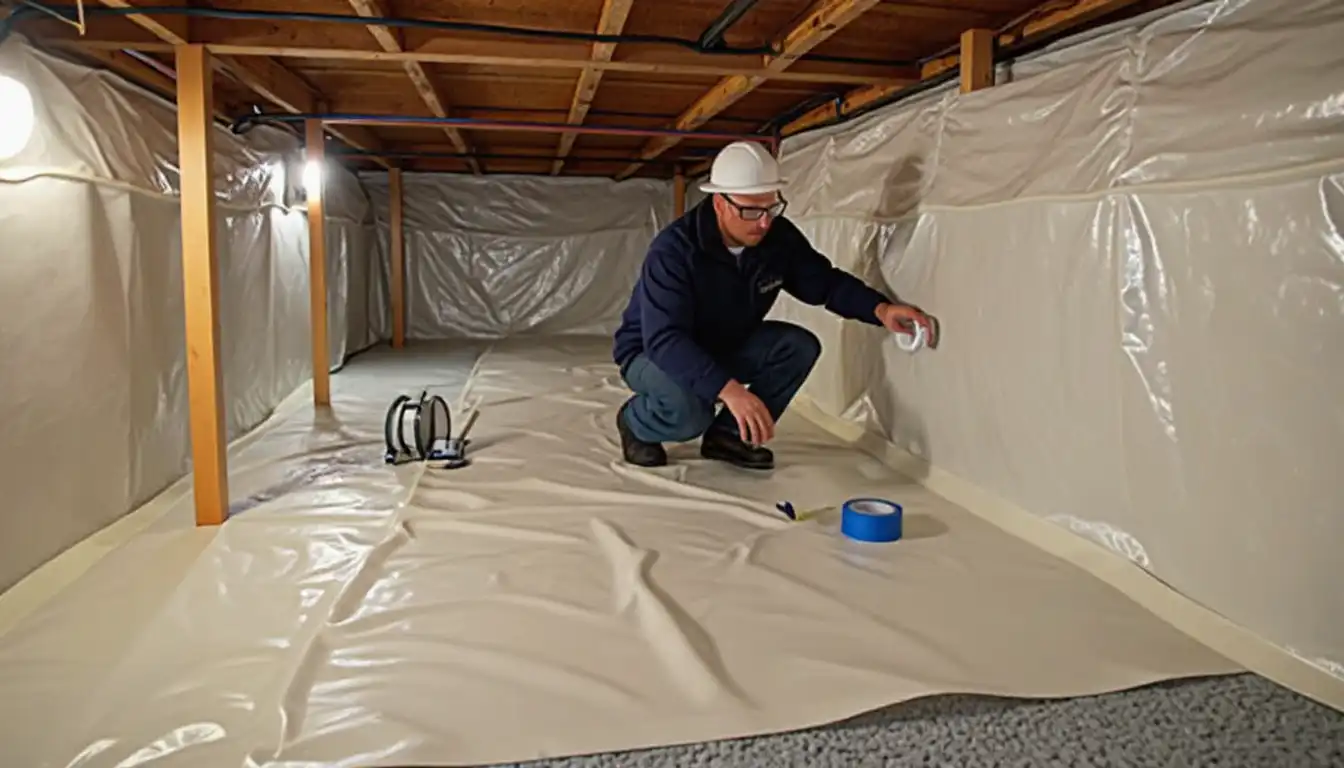
Building science research has reached a clear consensus: crawlspace encapsulation outperforms ventilation-based designs across every measured metric. The evidence comes from multiple authoritative sources.
Key Research Findings
- Advanced Energy (100 homes): Sealed averaged 52% RH vs. 77% RH in vented
- DOE Building America: 10-30% energy reduction from proper encapsulation in heating-dominant climates
- EPA: Crawlspace moisture directly linked to indoor air quality degradation
- BPI/RESNET: Crawlspace evaluation is a required component of professional energy audits
- IRC Code: Sealed crawlspaces are now code-compliant, reflecting research consensus
The DOE identifies crawlspaces as one of the highest-impact areas for energy improvement in existing homes. The magnitude of improvement increases in climate zones with extreme seasonal swings — like the Midwest. Every study in the DOE library shows improvement; the direction is consistent across all research.
The research also identifies what does not work. Fiberglass batt insulation in floor cavities — the most common treatment in Midwest homes — degrades consistently over time. Gravity, moisture absorption, and rodent activity cause batts to sag and detach. In-situ studies show actual R-values at 50-70% of labeled value within five to ten years. This supports the shift from floor insulation to foundation-wall insulation integral to the sealed-crawlspace approach.
Energy audit protocols now require crawlspace evaluation. BPI and RESNET auditors measure humidity, check for standing water, evaluate vapor barriers, inspect insulation, test duct leakage, and assess air sealing. These protocols recognize that crawlspace conditions directly affect whole-home performance and cannot be evaluated in isolation.
Section 7 of 10
How to Evaluate Whether Your Crawlspace Needs Attention
Start with two things: a flashlight and a $15 digital hygrometer from any hardware store. Place the hygrometer in the crawlspace for 24-48 hours during warm weather and record the readings.
| Humidity Reading | What It Means | Recommended Action |
|---|---|---|
| Below 50% | Low risk — conditions are well-controlled | Monitor seasonally; no immediate action needed |
| 50-60% | Moderate — approaching mold threshold | Evaluate vapor barrier and vent condition; targeted improvements likely sufficient |
| 60-70% | Elevated — mold growth likely within 24-48 hours | Vapor barrier + vent sealing; dehumidifier may be needed |
| Above 70% | High — biological activity likely already underway | Full encapsulation with dehumidification recommended |
Worked Example: Basic Crawlspace Assessment
Scenario: You place a hygrometer in your Kansas City crawlspace in July. After 48 hours, it reads 74% RH. You also observe: exposed soil (no vapor barrier), open foundation vents, sagging fiberglass insulation between joists, and white fuzzy growth on several floor joists.
Analysis: At 74% RH, conditions exceed the 60% mold threshold by a wide margin. The white growth confirms active mold colonization. Open vents are introducing humid summer air. Exposed soil contributes 10-15 gallons/day of vapor. Sagging insulation has lost thermal effectiveness.
Conclusion: Multiple conditions are active simultaneously. This crawlspace is a candidate for full encapsulation — vapor barrier, sealed vents, wall insulation, and dehumidification — rather than individual fixes that leave other conditions unaddressed.
Visual Inspection Checklist
- Standing water or damp soil — active moisture intrusion
- White or gray fuzzy growth on floor joists — mold colonization
- Dark staining on wood surfaces — sustained moisture contact
- Sagging or detached insulation — failed thermal protection
- Visible condensation on ductwork — dew-point problem
- Rodent droppings, insect damage, or pest tunnels — compromised environment
- Foundation vent status — open, closed, or sealed?
- Vapor barrier condition — is soil fully covered? Tears or gaps?
Professional energy audits add quantitative data: blower door testing (whole-house air leakage), duct blaster testing (duct loss volume), infrared cameras (thermal bypasses), and calibrated moisture meters (wood MC). These measurements establish a baseline and provide benchmarks for improvement. Our assessment tools page covers specific instruments and techniques.
Seasonal timing matters. Summer inspections show worst-case humidity and condensation. Winter reveals thermal impact — cold surfaces, drafts, insulation failures. Post-rain inspections show drainage performance. A single summer inspection during humid weather provides the most actionable data.
Section 8 of 10
Crawlspace Improvement Methods Compared
Five primary methods target different conditions. Most effective improvements combine two or more into an integrated system. Understanding what each does — and does not do — prevents partial fixes.
| Method | What It Does | What It Does Not Do | Best For |
|---|---|---|---|
| Vapor barrier | Blocks ground evaporation (10-15 gal/day); 6-mil minimum, 12-20 mil recommended | Does not address vent infiltration, thermal performance, or duct losses | Exposed soil as primary moisture source; low-moderate humidity |
| Vent sealing | Stops outdoor air exchange that introduces summer humidity and winter cold | Traps ground moisture if done without vapor barrier | Summer condensation; combine with vapor barrier |
| Wall insulation | Moves thermal boundary to foundation walls; rigid foam or spray foam resists moisture | Does not control humidity or seal air leaks alone | Cold floors, high energy bills; part of sealed-crawlspace transition |
| Dehumidification | Active humidity control independent of HVAC; essential during transition from vented to sealed | Does not address air leaks, insulation, or drainage problems | Persistent humidity above 60% even after sealing |
| Full encapsulation | Combines all methods: vapor barrier, sealed vents, wall insulation, air sealing, dehumidifier | Higher initial investment than individual methods | Multiple symptoms; high humidity + mold; ductwork in crawlspace |
Insulation strategy depends on configuration. In a vented crawlspace, insulation belongs in the floor — between joists, in contact with the subfloor. In a sealed crawlspace, insulation moves to foundation walls and floor insulation is often removed. Rigid foam board and closed-cell spray foam are most effective for walls because they resist moisture and don't support biological growth.
More detail on each approach, including installation specifics and cost considerations, is available on the crawlspace methods page.
Section 9 of 10
Kansas City and Des Moines: Why Climate Zone 4A Is Especially Hard on Crawlspaces
Both cities sit in DOE Climate Zone 4A (Mixed-Humid) — cold winters, hot and humid summers, and extreme seasonal swings. This creates the most challenging conditions for crawlspaces because it subjects them to both freezing temperatures that stress thermal performance and high humidity that drives moisture accumulation.
| Climate Factor | Kansas City | Des Moines |
|---|---|---|
| Summer outdoor RH | 75-85% | 75-85% |
| Summer dew points | Mid-60s to low 70s°F | Mid-60s to low 70s°F |
| Frost depth | 36 inches | 42 inches |
| January average lows | Upper teens | Near 10°F |
| Dominant soil type | Missouri River basin clay | Glacial till (high clay) |
| Condensation season | May-September | May-September |
Summer conditions make vented crawlspaces particularly ineffective. When 88°F air at 78% RH enters a crawlspace where surfaces are 64°F, it reaches 100% RH and deposits liquid water on every surface at or below that temperature. Venting actively wets the crawlspace during the highest-risk months.
Clay soils in both markets amplify moisture challenges. Clay holds water rather than draining it, saturates during sustained rainfall, and directs water toward foundations through hydrostatic pressure. When clay dries, it contracts and creates gaps between soil and foundation walls — which become water pathways during the next rain. Both Kansas City (Missouri River basin clay) and Des Moines (glacial till) soils maintain near-100% RH at shallow depths year-round.
Crawlspace Risk by Season: When Moisture and Energy Loss Peak
Effective solutions must address both seasonal extremes. A system designed only for summer dehumidification won't address winter heat loss. A system designed only for winter thermal performance won't prevent summer condensation. The sealed, conditioned crawlspace approach addresses both by creating a controlled environment that moderates temperature and humidity year-round.
Interactive Tool
Seasonal Moisture Cycle
Watch how crawlspace moisture levels shift through the four seasons — and when risk peaks in Kansas City and Des Moines.
Section 10 of 10
Decision Framework: Choosing the Right Solution
Match the intervention to your conditions. The goal is the minimum effective intervention that addresses all active problems — not under-treating (leaving conditions unaddressed) and not over-treating (investing in comprehensive solutions when targeted fixes suffice).
Step 1: Document Living-Space Symptoms
| Symptoms Present | Likely Conditions | Scope Indicator |
|---|---|---|
| Cold floors only | Thermal boundary issue (insulation, air sealing) | Targeted |
| Cold floors + musty odors | Thermal + moisture problems | Moderate |
| Cold floors + musty odors + high energy bills | Comprehensively unconditioned crawlspace | Full encapsulation |
Step 2: Match Crawlspace Conditions to Solutions
| Condition Profile | Recommended Solution |
|---|---|
| Exposed soil + moderate humidity (55-65%) | Vapor barrier as first step; monitor humidity after installation |
| Open vents + summer condensation | Seal vents + vapor barrier; dehumidifier may be needed during transition |
| Failed floor insulation + cold floors | Evaluate: replace floor insulation or transition to wall insulation with sealed crawlspace |
| High humidity (65%+) + mold growth | Full encapsulation with dehumidification — conditions are too advanced for partial measures |
| Ductwork in crawlspace + high energy bills | Sealed crawlspace brings ducts inside thermal envelope, reducing losses by 25-40% |
| Multiple symptoms present | Full encapsulation addresses all conditions as an integrated system |
Step 3: Professional Evaluation (Optional but Recommended)
A professional energy audit adds quantitative precision: blower door testing measures total air leakage, duct blaster testing quantifies conditioned air loss, moisture meters assess wood MC, and infrared cameras reveal thermal bypasses. These measurements transform qualitative observations ("it seems wet") into quantitative data ("78% RH, 22% wood MC") that support better decisions and provide improvement baselines.
Timing Considerations
- Summer: Best for diagnostic evaluation — worst-case humidity and condensation are visible
- Fall: Preferred for encapsulation work — seal before winter heating demand begins
- Spring: Good for catching moisture conditions early before peak levels
- After heavy rain: Shows drainage performance and water intrusion pathways
Check Your Understanding
A homeowner has cold floors and high energy bills but no musty smell. Their crawlspace has closed vents, a vapor barrier, and moderate humidity (58%). What scope of intervention does the decision framework suggest?
Reveal Answer
This is a targeted intervention scenario. The symptoms point to a thermal boundary issue (insulation and air sealing) rather than a moisture problem. At 58% RH with vents already closed and a vapor barrier present, moisture is controlled. The likely fix is addressing failed floor insulation and air-sealing thermal bypass pathways — or transitioning to wall insulation as part of a sealed configuration. Full encapsulation would be over-treating the conditions present.
Where to Go From Here
Key Takeaways From This Guide
- Stack effect: 40-50% of first-floor air comes from your crawlspace — continuously
- Moisture threshold: Above 60% RH, mold grows within 24-48 hours on wood surfaces
- Vented vs. sealed: 77% vs. 52% humidity — the data is unambiguous
- HVAC impact: Duct leakage wastes 25-40% of energy in unconditioned crawlspaces
- Three symptoms, one cause: Cold floors, musty smells, and high bills share a single root
- Right-size the solution: Match the intervention scope to your specific conditions
Recommended Next Steps
- Crawlspace Science — deeper physics behind the stack effect, moisture transport, vapor pressure, and dew point
- Identify Your Symptoms — connect upstairs problems to the crawlspace conditions causing them
- Compare Repair Methods — detailed comparison of each approach with when-to-use guidance
- Understand the Costs — investment ranges, ROI timelines, and cost-per-method breakdowns
- Use Our Assessment Tools — energy leak calculator and mold risk score for your home